
 한국어
한국어 中文
中文Urban construction sites often face dangers from contaminated groundwater. Harmful substances can migrate through the soil, including:
- Heavy metals
- Motor oil
- Sediments
SEMW’s Trench cutting & Re-mixing Deep wall Series method equipment builds a continuous, joint-free barrier. This impermeable wall isolates foundation pits, ensuring a dry and safe work environment.
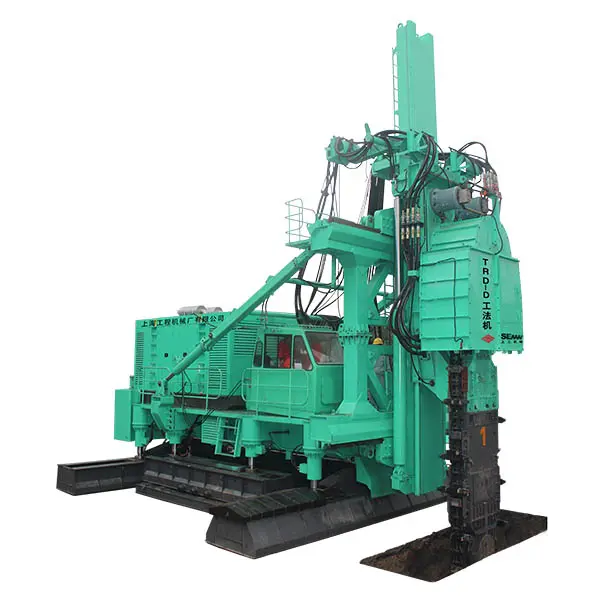
How the TRD Method Creates an Impermeable Cutoff Wall
The TRD method’s success comes from its unique construction process. It builds a strong, impermeable wall directly within the ground. This process transforms existing soil into a structural barrier, providing unmatched safety and stability for urban projects.
The In-Situ Soil Mixing Process
The TRD method works by mixing soil in its original location, or “in-situ”. SEMW’s equipment uses a specialized tool that functions very differently from traditional drills.
Imagine a long, rectangular steel post with a powerful chainsaw on its end. Operators insert this cutting post into the ground. Then, instead of just moving up and down, the post travels sideways (transversely) through the soil. As it moves, it performs several actions at once:
- It cuts a trench into the earth.
- It injects a cement-based grout into the trench.
- It thoroughly mixes the grout with the surrounding soil.
This innovative transverse movement creates a continuous panel. The process is not defined by the typical metrics of other methods.
A Different Approach to MixingThe TRD method does not rely on:
- Penetration or withdrawal speeds
- Up-and-down restroking motions
- Mixing blade rotations per meter
Its effectiveness comes from the continuous sideways cutting and mixing action, which builds the wall progressively.
This technique agitates and consolidates the soil mixture, forming a dense and uniform underground diaphragm wall right where it is needed.
Ensuring a Continuous, Joint-Free Barrier
Traditional foundation walls are often built in separate panels. These panels are then joined together, creating seams or joints. These joints are the weakest points of the barrier.
Common Failures in Traditional Walls
- Inadequate Hydraulic Cutoff: Joints in conventional walls can fail to stop water flow, especially under high artesian pressure from deep aquifers.
- Hydraulic Uplift Failure: Water pressure can build up beneath the foundation, creating a risk of the entire structure being pushed upward.
The TRD method eliminates these risks entirely. The transverse movement of the cutting post creates one single, monolithic wall without any joints. This continuous barrier provides a complete hydraulic cutoff, effectively sealing the excavation site from outside groundwater. This level of reliability is why the technology is trusted for critical infrastructure like subway tunnels, underground reservoirs, and dam reinforcement.
Achieving Superior Homogeneity and Strength
A wall is only as strong as its material. The TRD method produces a wall material with exceptional uniformity, or homogeneity, from top to bottom.
The vertical movement of the cutting chain inside the post mixes the entire soil profile. It blends different layers of sand, clay, and silt into one consistent material. This process overcomes the challenges of layered soils, where other methods might create columns with varying strength. The SEMW Trench cutting & Re-mixing Deep wall Series method equipment ensures the final wall has equal strength throughout its entire depth.
Engineers achieve this superior quality through a precise, multi-step process:
1.Continuous Deep Mixing: The equipment first mixes the soil with a bentonite slurry. This stabilizes the trench and creates a uniform base mixture.
2.Two-Phase Construction: Next, a cement binder is introduced and mixed in. This second phase solidifies the mixture into a strong, low-permeability wall.
3.Precise Monitoring: On-board sensors constantly monitor the wall’s straightness and verticality. This smart control system allows operators to make real-time adjustments, guaranteeing high accuracy.
After construction, teams can perform quality control tests, such as thermal integrity testing and strength tests on core samples, to verify the wall’s homogeneity and integrity. This comprehensive approach ensures the finished barrier meets the highest standards for safety and performance.
Why SEMW’s Trench cutting & Re-mixing Deep wall Series method equipment Excels in Urban Projects
The TRD method is not just technically superior; it is also perfectly suited for the unique challenges of urban construction. Modern cities demand foundation solutions that are safe, quiet, and efficient within crowded environments. SEMW’s equipment meets these needs directly, making it an invaluable tool for contractors and developers.
Overcoming Space Constraints in Congested Cities
Urban construction sites are notoriously cramped. Projects are often squeezed between existing buildings, narrow streets, and active public spaces. Large, towering construction machinery can be impossible to transport, set up, and operate in these conditions.
The SEMW Trench cutting & Re-mixing Deep wall Series method equipment solves this problem with its intelligent design. The machine has a significantly lower height compared to traditional deep-wall rigs. Its compact structure and robust track base allow for integral transport and stable operation on diverse ground conditions, even in tight quarters.
Compact Power for the CityThe equipment’s rotary track base and smaller footprint mean it can be positioned closer to property lines and existing structures without disrupting traffic or neighboring properties. This capability is essential for building foundations, subway stations, and underground parking in dense metropolitan areas.
This design allows construction teams to execute complex foundation projects on sites that would otherwise be inaccessible to conventional equipment. It brings powerful deep-walling capabilities to the heart of the city.
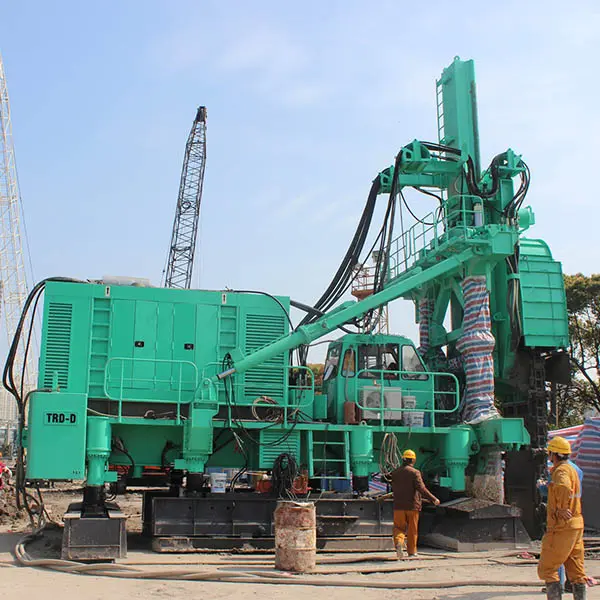
Minimizing Vibration and Noise for Urban Safety
Construction in cities is governed by strict rules about noise and vibration. Excessive shaking can damage nearby historic buildings or sensitive infrastructure, while constant noise disrupts residents, schools, and hospitals. Methods like impact pile driving create significant ground vibration and loud, percussive sounds that are often prohibited.
The TRD method operates with minimal noise and vibration. The equipment’s cutting chain moves smoothly and continuously through the soil, mixing it with grout. This process is more like a quiet slicing action than a forceful hammering. This low-impact operation makes the SEMW Trench cutting & Re-mixing Deep wall Series method equipment ideal for projects in sensitive urban zones.
Many major cities have implemented strict regulations to protect citizens from construction disturbances.
- New York City, USA, enforces some of the world’s most stringent noise codes for urban environments.
- London, UK, has successfully reduced construction noise complaints by 40% through firm control strategies.
- Tokyo, Japan, actively uses sound-absorbing materials and advanced noise control measures on its construction sites.
SEMW’s TRD technology helps projects comply with these regulations, ensuring work can proceed without causing public nuisance or risking damage to adjacent properties. It is the responsible choice for building safely and respectfully in a shared urban environment.
Gaining Cost and Time Efficiency on Contaminated Sites
Time and money are critical factors in any construction project. On sites with contaminated groundwater, these costs can spiral out of control. Traditional methods often require extensive dewatering systems to pump groundwater out of the excavation pit. This water must then be collected, treated, and safely disposed of—a slow and expensive process.
The TRD method offers a more direct and efficient solution. By creating a continuous, impermeable cutoff wall before major excavation begins, it eliminates the need for large-scale dewatering. The wall acts as a permanent barrier, keeping the worksite dry and isolated from migrating contaminants. This approach delivers significant savings in both time and budget.
Real-world projects demonstrate this efficiency:
- One team successfully built a watertight TRD earth retention system near the Potomac River. The project was completed on time with minimal ground movement, even in challenging soil conditions.
- In another application, the TRD method was used to cut off the hydraulic connection around an excavation, proving its effectiveness as a standalone water barrier.
Furthermore, the SEMW Trench cutting & Re-mixing Deep wall Series method equipment uses the existing soil as the primary wall material. This reduces the costs associated with purchasing and transporting fill materials and disposing of excavated soil. The superior strength of the TRD wall often allows for a thinner design compared to conventional methods, saving on cement and other binders. This combination of speed, safety, and material efficiency makes it a financially smart choice for complex urban foundations.
The TRD method is a revolutionary technology for urban foundation projects. It directly addresses the critical challenge of groundwater contamination. SEMW’s TRD method creates a robust, impermeable barrier with minimal disruption, setting a new standard for modern construction.
It is the definitive solution for ensuring long-term foundation stability and integrity in complex urban environments.
FAQ
How does the TRD method ensure wall strength?
The equipment’s cutting chain mixes all soil layers together. This process creates a uniform material. The final wall has equal strength from its top to its bottom.
Can this equipment work on small city sites?
Yes. The SEMW TRD equipment has a lower height and a compact design. It operates easily in congested urban areas where larger, traditional machines cannot fit.
Did you know?
Post time: Nov-07-2025